


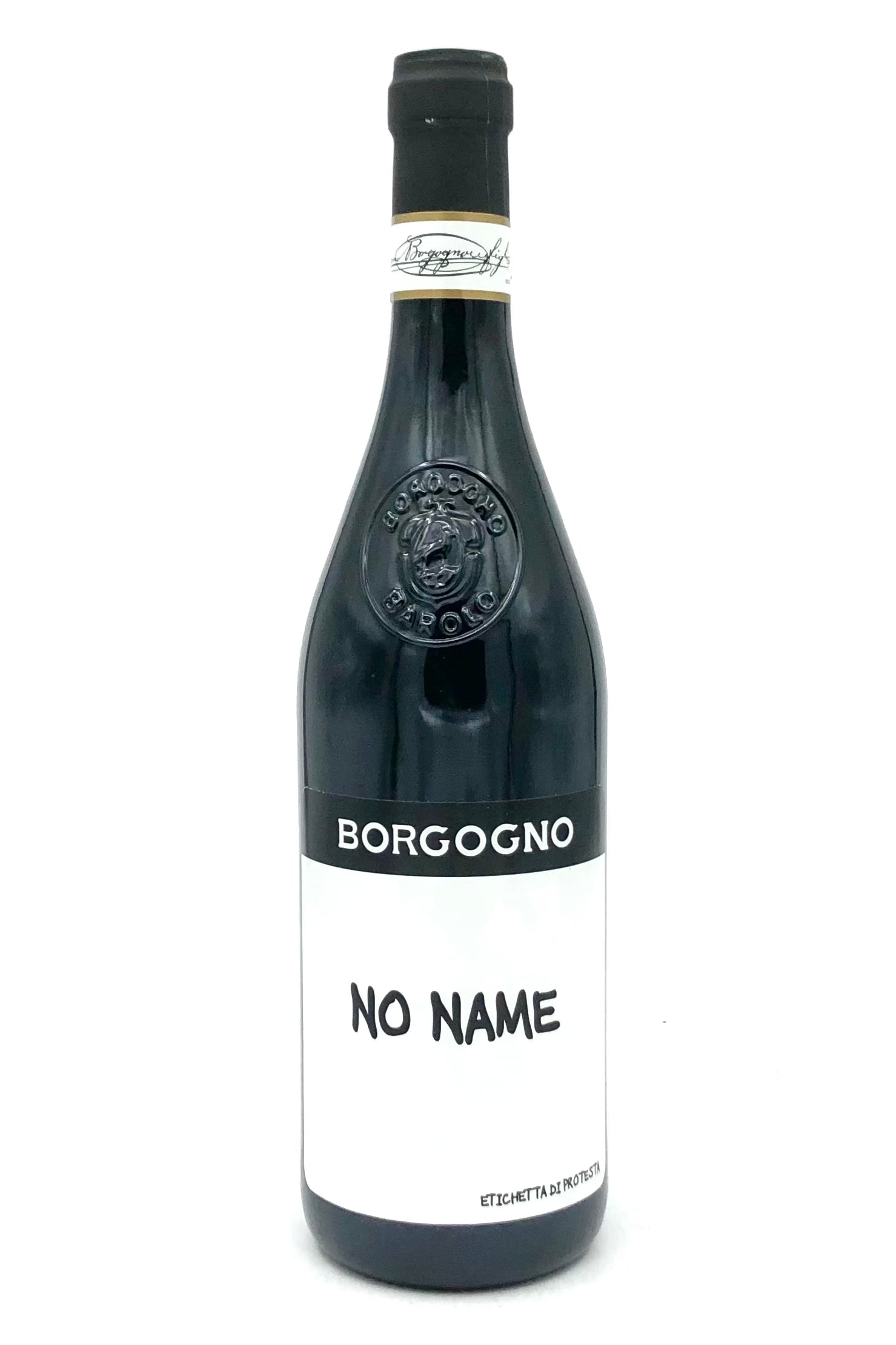

PRODUCT DESCRIPTION
In the mid-2000s, Giacomo Borgogno submitted a Nebbiolo wine from their Barolo vineyards for the official tasting panel review that every wine must pass before being legally designated as Barolo DOCG. The panel rejected it. The wine could not be called Barolo. Borgogno's response was neither to reformulate the wine nor to accept the rejection quietly. They bottled it exactly as it was — from Barolo vineyards, made with Barolo-heritage winemaking, aged in Slavonian oak exactly as the Borgogno tradition demands — and they labeled it "No Name." The back label explains: "Etichetta di Protesta." Protest label.
The deeper irony is historical: Giacomo Borgogno e Figli was founded in 1761 — making it the oldest continuously operating winery in Barolo. The family that has made Barolo longer than almost anyone else in the appellation had its wine rejected by the appellation's governing body. When the DOCG authorization was eventually granted — retroactively — Borgogno declined it. The point had already been made. The wine would remain "No Name" permanently, as both a product and a statement.
The Farinetti family, who purchased the estate in 2008 with an explicit promise to preserve and continue the Borgogno legacy, has maintained the "No Name" protest label in every vintage since — spontaneous fermentation in cement, two-plus years in large Slavonian oak, fully organic. The wine that resulted from that bureaucratic dispute is, by multiple reviewers' assessment, essentially a Barolo in all but legal designation: "No Name is basically a Barolo, named as such because the appellation's tasting panel wouldn't allow this Nebbiolo from Barolo the DOCG classification."
The 2023 vintage continues the series. Black cherry, violet, rose, fresh fruit, and spicy hints on the nose. Dry, harmonious, velvety, full-bodied, austere, and generous on the palate. Fine, firm tannins. The wine that refused to compromise its identity to receive a name it deserved.
Giacomo Borgogno e Figli was founded in 1761 in the village of Barolo, in the Langhe hills of Piedmont — making it the oldest continuously operating winery in the Barolo appellation, predating the formal codification of Barolo itself by nearly a century. The winery's historic underground fermentation and aging rooms, carved beneath the village, have housed multiple decades of Borgogno Barolos in an extensive library collection that the estate began building in the 1920s under Cesare Borgogno — who also became one of the first Piedmontese winemakers to ship wines internationally.
The Borgogno family stewarded the estate for 247 years before selling to the Farinetti family in 2008, with the explicit agreement that the centuries-long legacy of traditional Barolo production would be preserved and continued. Under Andrea Farinetti's direction — supported by consulting winemaker Beppe Caviola — the estate initiated a full organic conversion and returned to the original winemaking style that defined Borgogno across its first two and a half centuries: cement vat fermentation rather than stainless steel, and large Slavonian oak barrels rather than small French barriques. The estate today covers 39 hectares with 31 planted to vine, including rows in Barolo's most storied vineyard sites: Liste, Cannubi, Cannubi San Lorenzo, Fossati, and San Pietro delle Viole.
The No Name production protocol is the most specifically traditional and the most production-philosophically consistent expression in the Borgogno range. Nebbiolo from the estate's Barolo vineyard holdings is spontaneously fermented in cement vats — wild yeast rather than commercial inoculants, the ambient microbiological environment of the Barolo cellar contributing to the fermentation rather than a standardized yeast profile. After fermentation, the wine ages in large Slavonian oak barrels — the traditional Piedmontese vessel, whose older, neutral oak provides structural support and gentle oxidation without imparting strong aromatic compounds — for a little over two years before bottling. No filtration. Fully organic across both viticulture and cellar.
No published critic scores are available for the 2023 vintage specifically at this time. The following confirmed characterizations represent the established house style across recent vintages:
Giacomo Borgogno official (2022 vintage):
"Ruby red color with purple highlights. Ethereal, persistent with violet, rose, fresh fruits and spicy hints on the nose. A dry, harmonious, velvety, full-bodied wine, austere and generous wine."
Anthony Gismondi & Stuart Tobe (confirmed tasting note):
"Spicy, peppery, meaty, smoky, tar, prune, floral, strawberry jam, celery, earthy aromas. Dry, fresh, elegant but somewhat tannic but lighter and juicy than normal. Spicy, tar, tobacco, peppery, balsamic, strawberry, savoury, herbal flavours with a cocoa oak note. Youthful but solid balance and concentration. Needs 2-5 years."
Treve Ring (Wine-Searcher confirmed):
"No Name is basically a Barolo, named as such because the appellation's tasting panel wouldn't allow this Nebbiolo from Barolo the DOCG classification back in the mid 2000s. Hence, this wine is well known for being a protest against the Italian appellation system. Fragrant black cherry and violets is scented with scrubby herbs and cracked pepper, and framed with fine, firm tannins. Charmingly rustic, and drinking smartly now, ideally with wild mushroom ragu."
Produit d'une controverse (French retailer confirmed):
"No Name est en fait un Barolo — produit d'une controverse administrative. Bien qu'il ait reçu plus tard l'autorisation requise, le producteur était tellement irrité par ces manigances bureaucratiques qu'il a décliné cette désignation."
The Wise Old Dog:
"The No Name label was born out of a quiet protest when the winery submitted a Barolo sample that was rejected by the governing board. Borgogno was determined to share a wine that, in its mind, was worthy of Barolo DOCG status, but was denied a name."
Community note (Wine-Searcher):
"This wine opens with aromas of balsam, sandalwood, dried cherries, and wild herbs."
Nose
Ruby red with purple highlights — the 2023 vintage's youthful color communicating the Nebbiolo's inherent brightness even at this stage of its development. The nose opens with the most specifically Borgogno-traditional and the most specifically Nebbiolo-characteristic combination: violet and rose arrive first, with the floral delicacy that Nebbiolo expresses most beautifully from Barolo-altitude vineyards in the Langhe. Fresh fruits follow — red cherry, strawberry, and dried cherry alongside the floral notes. Spicy hints add the secondary dimension. With more air, the nose deepens into the more complex register: tar, tobacco, and balsamic from the Slavonian oak's long contact; smoky, meaty, and earthy secondary qualities; cracked pepper from the Nebbiolo's most varietal-distinctive aromatic compound; prune and dried fruit from the wine's vinous maturity; celery and herbal qualities from the Barolo terroir; sandalwood and wild herbs from the Langhe's specific scrubby-garrigue character.
Palate
Dry, harmonious, velvety, full-bodied, austere, and generous — the Borgogno official description's most accurate and the most completely confirmed palate characterization across every vintage. The entry is dry and firm, the Nebbiolo's tannin structure most immediately apparent before the wine's generous character reveals itself through the mid-palate. Spicy, peppery, balsamic, and strawberry flavors carry the mid-palate's most vivid character alongside the tobacco and herbal qualities. A cocoa oak note from the Slavonian oak's long barrel contact adds secondary richness. The tannins are firm and fine rather than harsh — "somewhat tannic but lighter and juicy than normal" in the Gismondi characterization, a wine that is more accessible than the extended-maceration Borgogno Barolos while retaining the structural integrity and the Nebbiolo identity that makes them so specifically age-worthy.
Finish
Long, balsamic, and spiced. The tar, tobacco, and balsamic qualities carry through the close alongside peppery warmth and the subtle cocoa note. The wine resolves into something harmonious and genuinely satisfying — the austere qualities of the entry fully integrated by the finish's close.
| Category | Details |
|---|---|
| Appellation | Langhe DOC — Piedmont, Italy |
| Variety | 100% Nebbiolo |
| Vintage | 2023 |
| Winery | Giacomo Borgogno e Figli — Barolo village |
| Founded | 1761 — oldest continuously operating winery in Barolo |
| Original Ownership | Borgogno family — 247 years |
| Current Owners | Farinetti family — since 2008 |
| Director | Andrea Farinetti |
| Consulting Winemaker | Beppe Caviola |
| Organic | Yes — full organic certification |
| Fermentation | Spontaneous / wild yeast — cement vats |
| Aging | Large Slavonian oak barrels — 2+ years |
| Origin of Wine | Barolo vineyard sites — Liste, Cannubi, Cannubi San Lorenzo, Fossati, San Pietro delle Viole |
| Legal Classification | Langhe DOC — not Barolo DOCG |
| Why Not Barolo | Rejected by appellation tasting panel in the mid-2000s; DOCG later offered but refused |
| The Protest | Etichetta di Protesta — Borgogno declined the retroactive DOCG designation |
| Wine Library | 200,000+ bottles preserved since 1961 — including library releases up to 20 years old |
| Style / Identity | Traditional Barolo-heritage Nebbiolo in Langhe DOC — protest, authenticity, and elegance |
| Aromas & Flavors | Violet, rose, black cherry, dried cherry, fresh fruit, spice, tar, tobacco, pepper, balsamic, strawberry, sandalwood, wild herbs, earthy, smoky, cocoa oak |
| Drinking Window | Now through 2030 — benefits from 2-5 years of cellaring |
| Bottle Size | 750ml |
The firm tannins, balsamic acidity, and savory Nebbiolo character make this a classic Piedmontese food wine:
000 bottles have been preserved. Today, the winery continues to offer its clients library releases, including wines that are 20 years old. Borgogno probably has the largest Library Collection of Barolo old vintages of entire the Barolo area.
Bottle Size: All bottles are 750ML/700ML unless otherwise noted.
21 and Over: Adult Signature Required
Your cart is empty
Start shopping
