


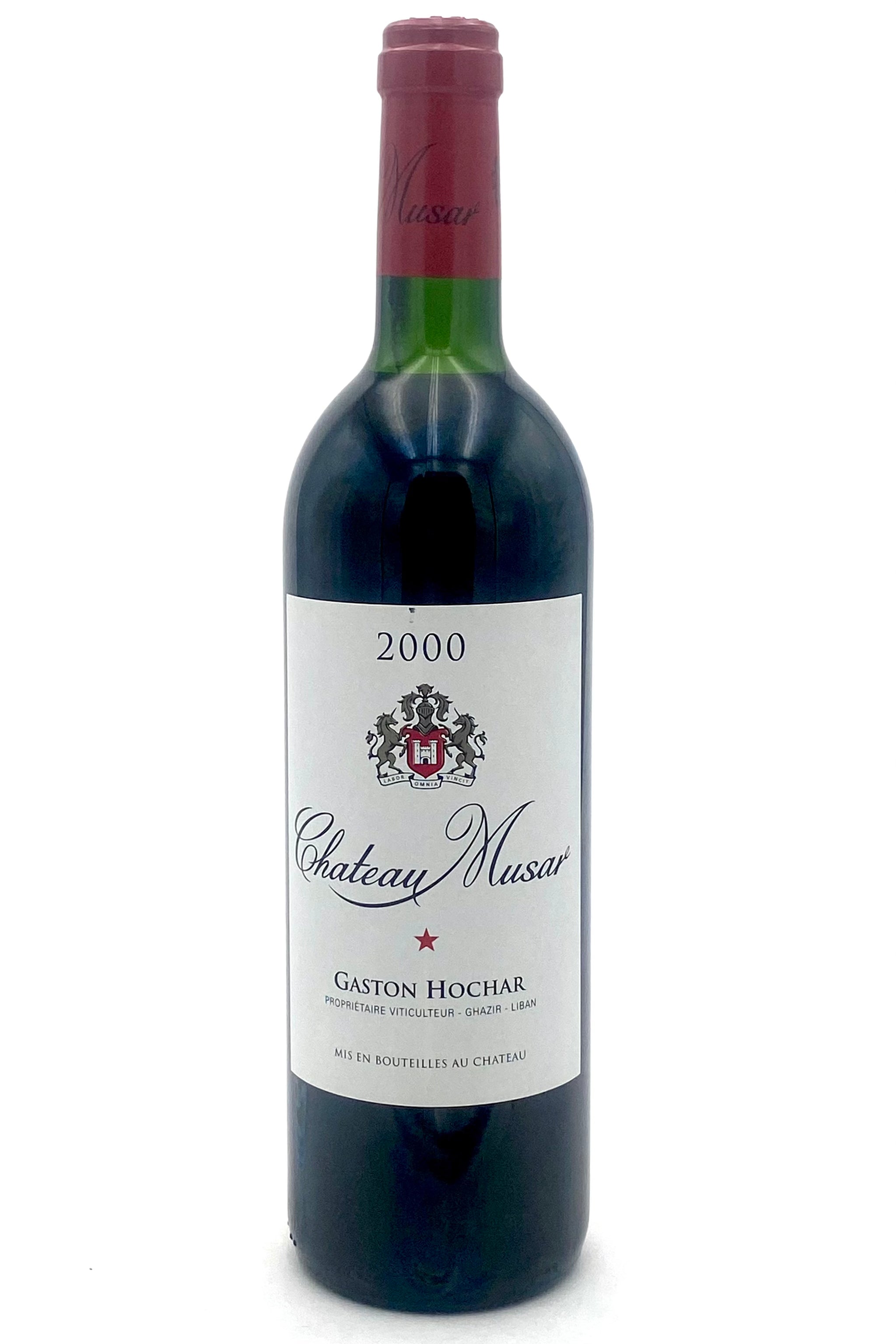

PRODUCT DESCRIPTION
Chateau Musar is often compared to the First Growths of Bordeaux, or to the great wines of Châteauneuf-du-Pape — an apt comparison, but one with real limits. Those wines define their regions. Musar defines a nation. It is one of the most celebrated and storied wines on Earth, a wine of place whose impeccable quality earns it a seat at that table, but whose character is entirely, unmistakably its own.
Gaston Hochar planted his first vines in 1930 after returning to Lebanon from Bordeaux. In 1941, Major Ronald Barton of Château Langoa-Barton, stationed in Lebanon during the Second World War, befriended Hochar — a friendship that deepened the estate's connection to Bordeaux and shaped the Musar style for generations to come. Serge Hochar, Gaston's son, became winemaker in 1959 after completing his own oenology studies in Bordeaux, and it was Serge who built Musar into the singular, globally revered wine it is today — a natural winemaker long before the term existed, whose non-interventionist philosophy produced a vivacity, an energy, and an earthiness that no other estate has been able to replicate.
The 2000 vintage comes from vines as old as a century, grown at 4,000 feet of elevation in the Bekaa Valley, cradled between two mountain ranges running parallel to Lebanon's Mediterranean coast — 300 days of sunshine a year, cool nights, and limestone soils. The wine survived Lebanon's civil war years that once forced Musar to look entirely abroad for its market, a hardship that, once discovered by international critics and sommeliers, only deepened the wine's mystique. Wine Enthusiast awarded 91 Points: "exceptional concentration, structure and balance mark this blend of Cab, Cinsault and Carignan that's ripe with cassis and plums and a plume of smoke, earth and barnyard funk. Tannins subdued into a powdery softness, it's elegantly textured yet full and forward with a rich, layered complexity." A quarter century after harvest, the wine has settled into a deep ruby-garnet color with tones of brick and orange at the rim — dried strawberry, baked red plum, and licorice-scented wild game giving way, with air, to rose petals, sweet herbs, cigar wrapper, balsamic, warm earth, mushroom, and worn leather. A wine that combines, as one merchant put it, the breadth and spice of mature Châteauneuf-du-Pape, the balsamic lift of a well-aged Brunello, and the savory muscle of an aged Barolo — and yet tastes like nothing but itself.
Château Musar was founded in 1930 by Gaston Hochar in Ghazir, Lebanon, following his return from studying winemaking in Bordeaux. In 1941, Major Ronald Barton — of the celebrated Bordeaux estate Château Langoa-Barton — was stationed in Lebanon during the Second World War and befriended Hochar, an encounter that strengthened the estate's ties to Bordeaux and directly influenced the Musar style. Serge Hochar, Gaston's son, took over as winemaker in 1959 while completing his own oenology degree in Bordeaux, and it was under Serge's stewardship across the following decades — including the entire span of Lebanon's civil war, during which Musar continued producing wine even as fighting raged nearby — that the estate built its reputation as one of the world's most singular and most celebrated wineries.
Château Musar Red is a blend of Cabernet Sauvignon, Cinsault, and Carignan sourced from vineyards near the Bekaa Valley villages of Aana and Kefraya, on gravelly soils over limestone, planted from the 1930s onward. The mature bush vines average around 40 years of age (with some plantings reaching a century), farmed at low yields between 15 and 35 hectoliters per hectare, at elevations reaching 4,000 feet. Production follows a genuinely patient, seven-year timeline: the varietal components undergo lengthy fermentation in cement vats at temperatures below 30°C, then are transferred six months after harvest into French oak barrels — sourced from the forest of Nevers — for one year. The components are blended together two years after harvest, then returned to cement tanks before bottling twelve months later. After four more years of bottle maturation in Musar's deep stone cellars, the finished wine is finally released a full seven years after the vintage. Bottled unfined and unfiltered, suitable for vegans, and prone — like many great aged wines — to throwing sediment, especially in vintages over a decade old.
Wine Enthusiast — 91 Points:
"Exceptional concentration, structure and balance mark this 11-year old blend of Cab, Cinsault and Carignan that's ripe with cassis and plums and a plume of smoke, earth and barnyard funk. Tannins subdued into a powdery softness, it's elegantly textured yet full and forward with a rich, layered complexity."
Jancis Robinson (house style context, on a 20-year retrospective look at the same vintage):
"Now at 20 years after the vintage, the 2000 holds on to its primary fruit whilst really starting to reveal the classic Musar identity, balancing out the characteristic sweet spice and desiccated fruit notes with more evolved elements of leather, tar, tobacco and a hint of game. These complex aromas and flavours are lifted with a fresh lick of acidity that will ensure the wine will continue to age gracefully for years to come."
CellarTracker community:
"OMG, for 30 euros, drinks like 300 euros Bordeaux. Just great."
CellarTracker community (second review):
"Rather nice, sweet fruit, tannins now fully resolved and lots of baking spice and tobacco... a touch of chestnut here. Classic Musar!"
Wine-Searcher aggregate — 91/100 (2000 vintage)
Nose
Deep ruby-garnet, with brick and orange tones developing at the rim — the color of genuine age, twenty-five years removed from harvest. Dried strawberry, baked red plum, and licorice-scented wild game open the nose, joined by a plume of smoke, earth, and characteristic barnyard funk. With extended air — Musar rewards real patience, often 45 minutes to an hour — rose petals, sweet herbs, and cigar wrapper emerge, followed by balsamic notes, warm earth, sliced mushroom, and worn leather.
Palate
Exceptional concentration, structure, and balance define the palate — cassis and plum fruit carrying real depth, with tannins subdued into a powdery softness that gives the wine an elegantly textured, full, and forward character. Sweet fruit, baking spice, and tobacco layer through the mid-palate, with a touch of chestnut adding warmth. Rich and layered, with the fresh lick of acidity that has always been Musar's calling card — the specific quality that allows these wines to age for decades without ever losing their vibrancy.
Finish
Long, complex, and continually evolving — closing, then reopening in the glass to reveal new layers as time passes. Leather, tar, tobacco, and a hint of game persist through the close, balanced by that same fresh acidity. A finish built for a wine that Wine Access specifically noted still has "decades ahead of it" despite already carrying a quarter century of bottle age.
| Category | Details |
|---|---|
| Appellation | Bekaa Valley, Lebanon |
| Variety | 33% Cabernet Sauvignon · 33% Cinsault · 33% Carignan |
| Vintage | 2000 |
| Producer | Château Musar — Ghazir, Lebanon |
| Founded | 1930 by Gaston Hochar |
| Winemaking Legacy | Serge Hochar, winemaker from 1959; non-interventionist, natural philosophy |
| Bordeaux Connection | Major Ronald Barton (Château Langoa-Barton) befriended Gaston Hochar, 1941 |
| Vineyards | Near Aana and Kefraya — gravelly soils over limestone, up to 4,000 feet elevation |
| Vine Age | Average 40 years, some over 100 years |
| Yields | 15-35 hl/ha |
| Fermentation | Cement vats, below 30°C |
| Oak | French oak (Nevers forest), 1 year, applied 6 months post-harvest |
| Release Timeline | 7 years after harvest (2 years to blend, 1 year rest, 4 years bottle aging) |
| Fining/Filtration | Unfined and unfiltered |
| Vegan | Yes |
| ABV | 13.5% |
| Critics | Wine Enthusiast 91 Points · Wine-Searcher aggregate 91/100 |
| Style / Identity | A wine that defines a nation — vivacity, earthiness, and complexity found nowhere else |
| Aromas & Flavors | Cassis, plum, smoke, earth, barnyard, dried strawberry, licorice, rose petal, cigar wrapper, balsamic, mushroom, leather, tar, tobacco |
| Drinking Window | Now through 2040+ |
| Bottle Size | 750ml |
Bottle Size: All bottles are 750ML/700ML unless otherwise noted.
21 and Over: Adult Signature Required
Your cart is empty
Start shopping
